Ontdek onze brandbeveiligingsoplossingen voor daken met PV
9-9-2025
BarrierSheet en Coverboard terminologie: wat de termen betekenen
Coverboard, brandwerende plaat, onbrandbare plaat en dakbeschermingsplaat worden vaak in dezelfde gesprekken gebruikt, maar het zijn geen technische synoniemen. Inzicht in de terminologie helpt ontwerpers om de vereiste functie en onderbouwing nauwkeuriger te specificeren.
Why roofing terminology varies
Roof terminology varies by country, profession and project type. A roofing contractor may use the term Coverboard, a fire engineer may refer to a fire barrier and an architect may describe a protection board. Specifications may instead focus on classifications, mechanical properties or system approvals.
These descriptions can overlap, but the name itself does not establish performance. The more useful question is what function the product is expected to perform within the roof build-up and what evidence supports that function.
Coverboard
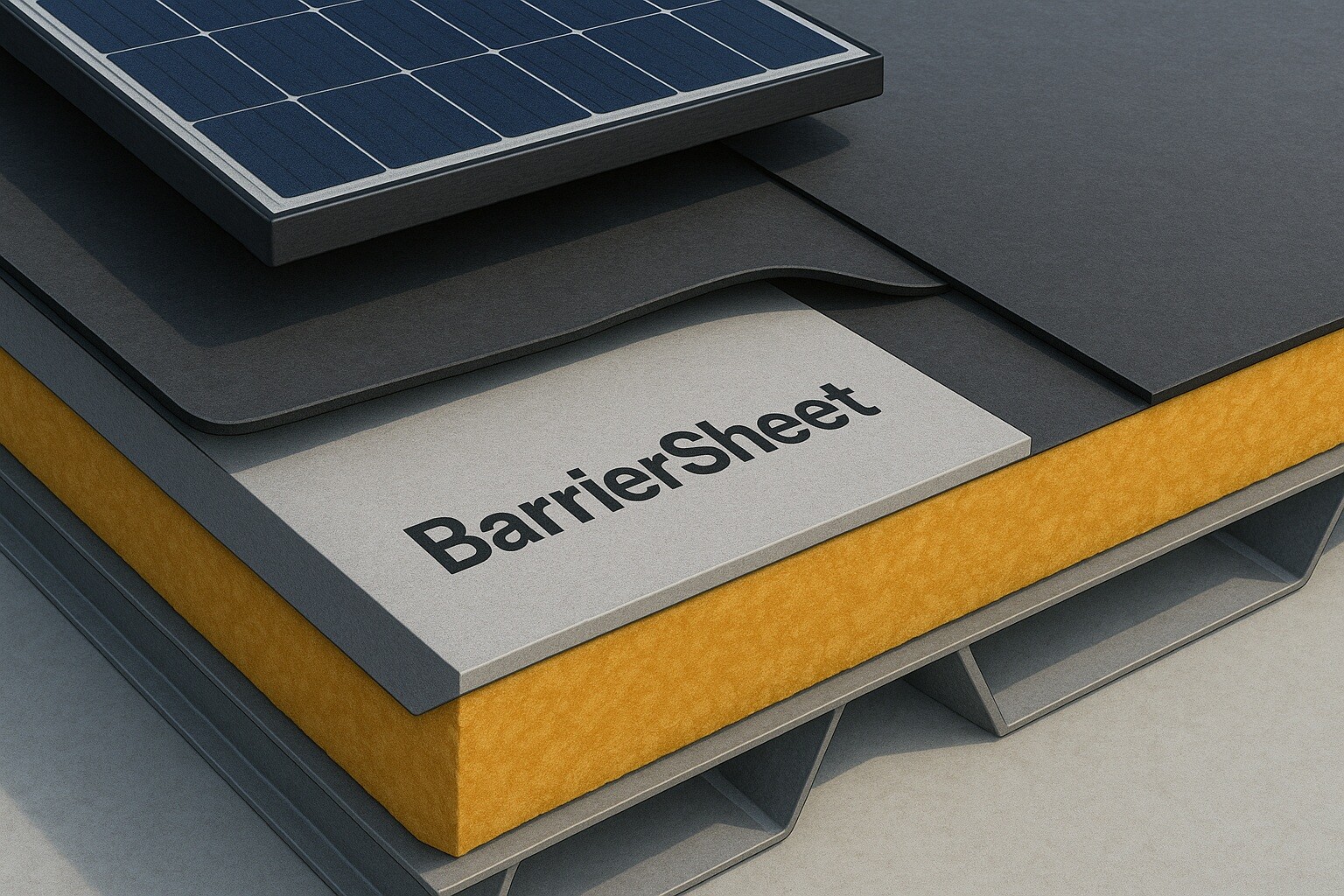
A Coverboard is generally installed between the insulation and waterproofing membrane. Depending on the product and roof system, it can provide a stable substrate, protect insulation, contribute to mechanical performance or perform a role within the fire strategy.
Different Coverboards can have different composition, mass, mechanical properties and fire performance. Products should therefore be assessed against the functions required by the specific roof rather than assumed to be interchangeable because they occupy a similar position.
Fire barrier and non-combustible terminology
Fire barrier describes an intended function, while non-combustible refers to a material property supported by the relevant reaction-to-fire classification. Where fire performance is part of the specification, the evidence should therefore identify both the product property and, where relevant, the performance demonstrated by the complete roof or roof-PV assembly.
This distinction makes the specification clearer for designers, contractors and insurers and avoids relying on generic terminology as a substitute for technical evidence.
Waar AllShield BarrierSheet past
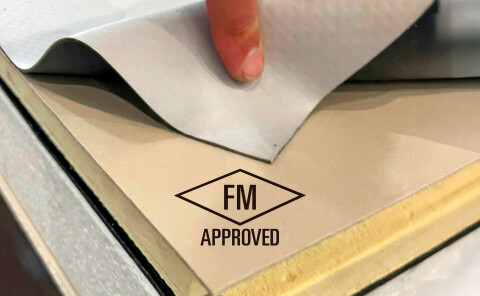
AllShield BarrierSheet is een 2,5 mm cementgebonden Fire board die direct onder de waterdichte membraan wordt geïnstalleerd. Het is geclassificeerd als A1 volgens EN 13501-1 en weegt ongeveer 3 kg/m².
Het bewijs ervan bestaat op verschillende niveaus. Een gedefinieerde dakopbouw met BarrierSheet is geclassificeerd als BROOF(t1) volgens het Efectis Classificatierapport 2025-Efectis-R000983. ZAG dak-PV testen toonden aan dat BarrierSheet directe vlamdoordringing naar diepere constructielagen in de geteste configuraties voorkwam, terwijl FM Approval Report PR472014 formele dekking biedt voor gespecificeerde dak- en dak-PV-systemen.
Deze bewijzen beantwoorden verschillende vragen en moeten daarom worden gebruikt volgens hun toepassingsgebied.
Specificeer de vereiste prestatie
Een bruikbare specificatie gaat verder dan alleen het vragen om een Coverboard of onbrandbare plaat. Het benoemt de vereiste materiaaleigenschappen, positie in het dak, installatiemethode, relevante classificaties of goedkeuringen en het systeembewijs dat nodig is voor het beoogde project.
Dit geeft dakdekkers, ontwerpers, risicodeskundigen en verzekeraars een duidelijkere basis om de voorgestelde constructie te beoordelen zonder generieke vergelijkingen te maken tussen verschillende Coverboard-technologieën.
Voor gedetailleerde productinformatie, classificaties en actuele FM-documentatie, zie de AllShield BarrierSheet productpagina of neem contact op met AllShield voor het bewijs dat relevant is voor uw project.
Passieve brandbeveiliging voor nieuwe en gerenoveerde daken met PV
De juiste dakopbouw voor PV en gedocumenteerde brandveiligheid
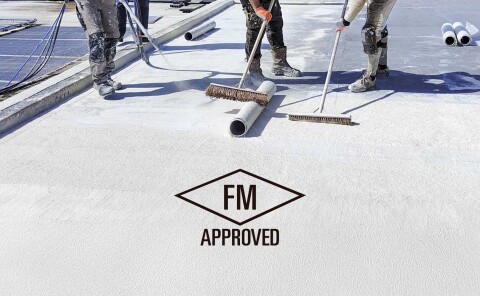
Platte daken met zonnepanelen vereisen brandbeveiliging die rekening houdt met de volledige dakopbouw. AllShield BarrierSheet is onze standaardoplossing voor nieuwbouw en dakrenovatie, geïnstalleerd onder een nieuwe waterdichte membraan. AllShield Blue is een specialistisch alternatief voor geselecteerde bestaande daken waarbij het behouden van de huidige waterdichting een duidelijk praktisch voordeel biedt.
Heeft u vragen voor ons?
Wij staan voor u klaar!