Discover our fire-protection solutions for roofs with PV
9-3-2026
Preparing an existing commercial roof for PV
Installing PV on an existing commercial roof changes both loading and fire exposure. Before selecting the PV system, assess the roof itself: structure, insulation, waterproofing, remaining service life, fire behaviour and the evidence available for the proposed roof-PV build-up.
Start with the roof, not the panels
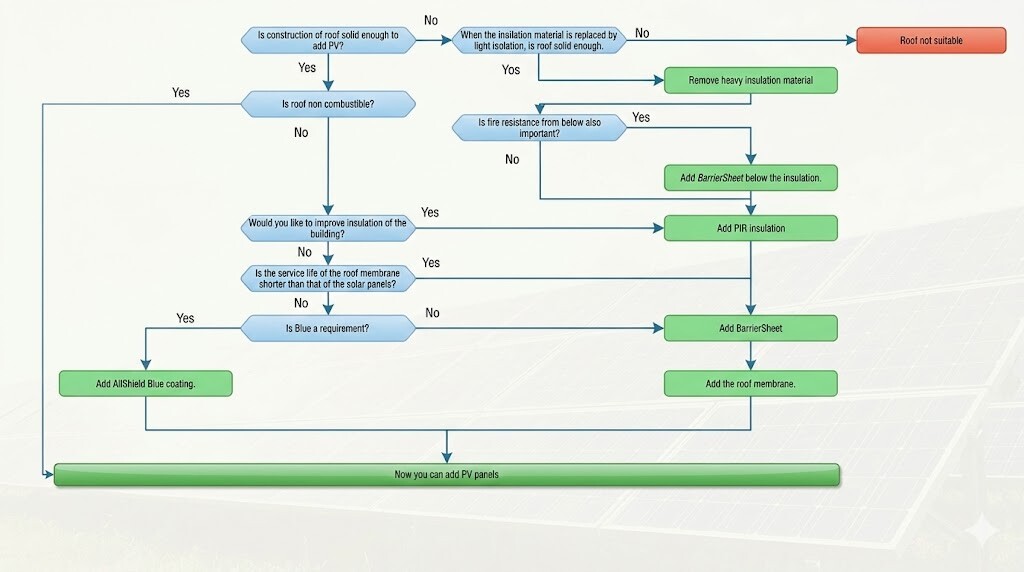
A PV retrofit should begin with the existing building rather than with the number of panels that can fit on the roof. The first step is to identify the structural deck, insulation, waterproofing membrane, attachment method, roof condition and remaining service life, and then establish how much structural capacity remains after the existing permanent loads have been taken into account.
PV introduces additional permanent load through modules, mounting systems, ballast or attachments and associated equipment. If the roof also needs refurbishment, the weight of the new roof build-up needs to be considered within the same structural budget.
Fire risk introduces another decision. Electrical design, connectors, cable routing, workmanship, inspection and maintenance influence the probability of ignition, while the roof construction influences how an incident can develop once fire reaches the waterproofing membrane.
Use assembly evidence where it exists
Individual material classifications remain useful, but they do not describe every possible roof-PV combination. The membrane, insulation, protective layers, deck, fixings and PV geometry all influence the complete system.
Where relevant fire testing, classification or approval evidence is available, it should therefore be considered before the final roof-PV build-up is fixed. This reduces the risk of discovering late in the project that the selected roof and PV strategies are incompatible.
Add passive separation where the project requires it
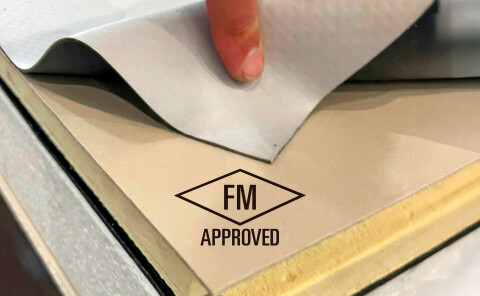
Where an existing roof contains combustible materials, a non-combustible separation layer beneath the waterproofing membrane can provide an additional barrier between a rooftop fire and deeper construction.
AllShield BarrierSheet provides this function while adding approximately 3 kg/m² to the roof build-up. In the tested ZAG roof-PV configurations, BarrierSheet prevented direct flame penetration into deeper structural layers.
That combination of passive protection and low added weight can be particularly relevant where an existing structure has limited reserve capacity for PV.
Match the roof life to the PV investment
Fire performance is only one part of the refurbishment decision. Installing a PV system intended to remain in service for decades over a waterproofing membrane approaching replacement can create avoidable future cost.
If major roof work becomes necessary during the PV service life, modules may need to be removed and reinstalled. The condition and remaining life of the waterproofing should therefore be considered together with the PV investment rather than treated as a separate maintenance issue.
Bring structural and insurance requirements together early
The acceptable roof solution can also be influenced by insurer requirements and by the evidence available for the complete roof-PV assembly. Where an FM Approved solution is required, the proposed build-up should be matched to the applicable RoofNav assembly.
The most efficient sequence is therefore to assess the asset, structure and roof first and commit to the final PV solution afterwards. For a complete decision framework, read Olivier Langejan's whitepaper Rooftop PV on existing commercial buildings. AllShield can also review an existing roof build-up before the PV design is fixed.
Passive fire protection for new and refurbished roofs with PV
The right roof assembly for PV and documented fire protection
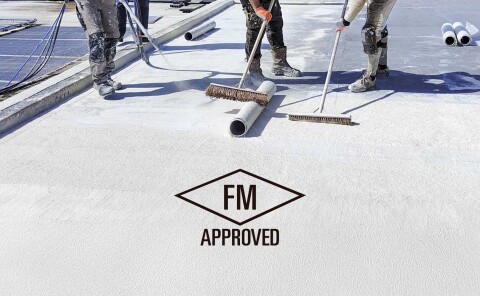
Flat roofs with solar PV require fire protection that considers the complete roof assembly. AllShield BarrierSheet is our standard solution for new construction and roof refurbishment, installed beneath a new waterproofing membrane. AllShield Blue is a specialist alternative for selected existing roofs where retaining the current waterproofing provides a clear practical advantage.
Do you have any questions for us?
We're here for you!