Discover our fire-protection solutions for roofs with PV
30-4-2026
RC62 and rooftop PV: managing fire risk on combustible roof build-ups
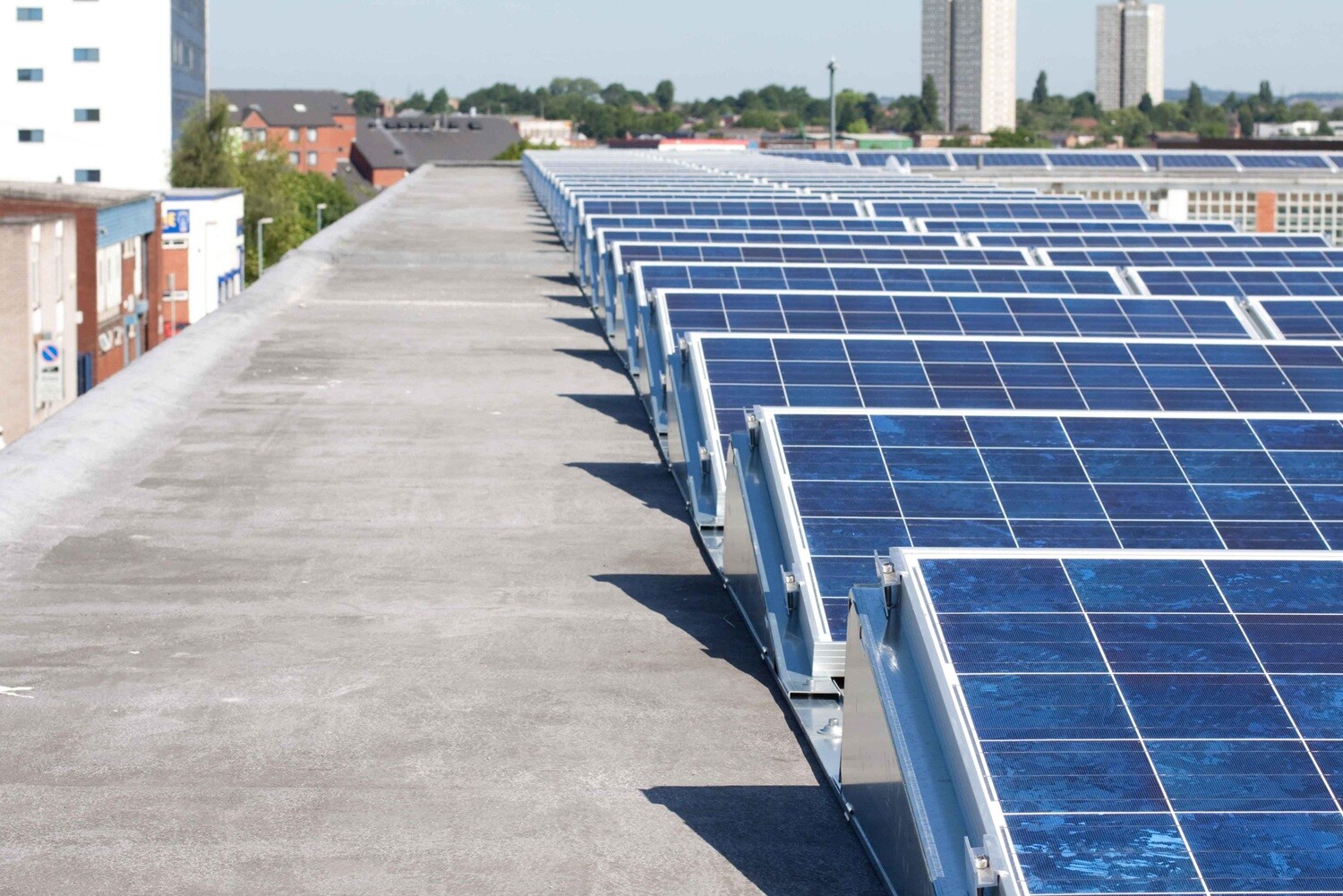
RC62 places the complete roof-PV system at the centre of fire-risk management. For existing commercial roofs containing combustible materials, the challenge is to combine measures that reduce ignition probability with an appropriate roof strategy before PV is installed.
What RC62 asks project teams to consider
RC62, Recommendations for fire safety with PV panel installations, addresses rooftop PV across planning, design, installation, operation and maintenance. It therefore treats fire risk as a system issue rather than as the responsibility of one product or one trade.
The roof itself is explicitly part of that assessment. RC62 states that new rooftop PV installations should not lower the fire performance or classification of the roof. It also states that, where installation on a combustible or partly combustible roof is unavoidable, a fire-resistant covering should be applied.
For existing commercial buildings, that makes the condition and construction of the roof an early design question. The project team should establish the deck, insulation, waterproofing membrane, fixing method, remaining roof life and structural capacity before the final PV solution is committed.
The PV system then adds a second layer of requirements through electrical components, additional load, mounting, access and a different fire exposure above the waterproofing membrane. Prevention and consequence management therefore need to be considered together.
Where AllShield BarrierSheet can fit
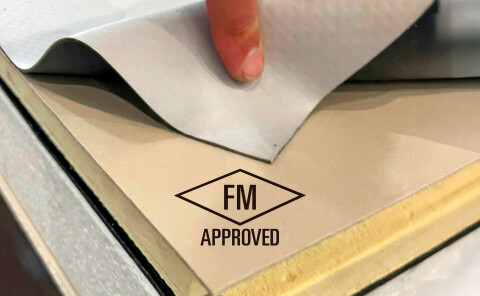
AllShield BarrierSheet can provide a non-combustible separation layer directly beneath the waterproofing membrane. In the tested ZAG roof-PV configurations, BarrierSheet prevented direct flame penetration into deeper structural layers.
Its low added weight makes this particularly relevant to existing commercial roofs where structural reserve for PV may already be limited. For projects using an FM route, BarrierSheet is also included in specified FM Approved roof and roof-PV assemblies under Approval Report PR472014.
RC62 remains a complete-system recommendation
BarrierSheet addresses one specific part of the roof strategy. RC62 also considers electrical installation, system design, maintenance, access, emergency planning and the wider fire-risk assessment. Those measures remain necessary regardless of the passive layer selected.
The benefit of documented BarrierSheet evidence is therefore not that one product resolves the complete RC62 process, but that designers and risk engineers have a defined passive roof measure to assess alongside the other controls.
Resolve the roof before committing to PV
For an existing commercial building, the best moment to establish these requirements is before the PV investment is fixed. The owner needs to know what parts of the existing roof can remain, how much structural capacity is available, what the insurer requires and what fire evidence supports the proposed roof-PV construction.
Resolving those questions early can avoid redesign, additional roof work or changes to the PV layout later. If you are assessing PV on an existing commercial roof, contact AllShield to review whether BarrierSheet can form part of the project strategy.
Passive fire protection for new and refurbished roofs with PV
The right roof assembly for PV and documented fire protection
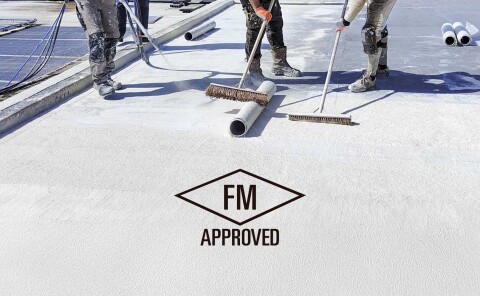
Flat roofs with solar PV require fire protection that considers the complete roof assembly. AllShield BarrierSheet is our standard solution for new construction and roof refurbishment, installed beneath a new waterproofing membrane. AllShield Blue is a specialist alternative for selected existing roofs where retaining the current waterproofing provides a clear practical advantage.
Do you have any questions for us?
We're here for you!