
Architect, building engineering background | Commercial roofs, rooftop PV and fire risk
Olivier Langejan Rooftop solar fire resilience specialist
Olivier Langejan looks at rooftop PV as a building decision before it becomes an energy project. Trained as an architect, with a background in building technology and hands-on involvement in roof and PV fire-test programmes, he asks one question first: is this roof actually ready for PV, and are the decisions being taken in the right order?
Below you will find his whitepaper series, followed by his background, talks and speaking enquiries.

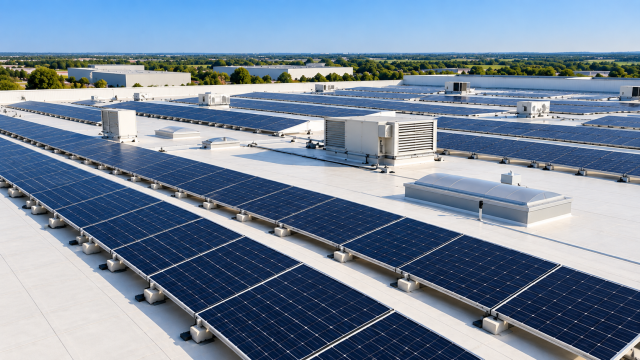
Olivier documents his thinking in an open whitepaper series. The papers draw on published research, fire tests, standards and incident data, and keep what has been demonstrated separate from his own interpretation.
Olivier works with AllShield and is open about it: the systems he helped develop and test are one route among several, and his papers treat them that way.
Rooftop PV on existing commercial buildings
A decision framework for resolving roof constraints before the PV investment is committed.
Download white paper
Rooftop PV on new commercial buildings
Designing the roof and PV as one system from the start.
Download white paper
The economics of the rooftop PV decision
Probability, consequence and lifecycle cost from the asset owner's perspective, including Business Interruption.
Download white paper
From risk models to design requirements
How five established risk frameworks lead to one design conclusion for roofs with PV.
Download white paper
Beyond flame spread
How far a rooftop PV fire can travel into the roof before it becomes a building loss, and what a separation layer changes.
Download white paper
Available on request
The following papers are available on request. Most are complete drafts in external review; comments, corrections and field experience are welcome and are used in the published versions.
What does a fire test actually prove?
What a fire test result does and does not demonstrate about a real roof with PV.
Request a copy
What if the PV panel could not burn?
What a lower-combustibility PV module does and does not change for the roof beneath it.
Request a copy
DC arcs as a heat source
How DC arc faults start, persist and end, and when an electrical fault becomes a sustained thermal source.
Request a copy
DC arcs at the roof-PV interface
What determines roof exposure to a sustained DC arc and what current evidence shows about measures to limit it.
Request a copy
What does an inspection actually prove?
What a satisfactory inspection does and does not establish about fire risk on a combustible roof.
Request a copy
How much does PV clearance actually solve?
What module-to-roof clearance does and does not demonstrate about the roof beneath it.
Request a copy
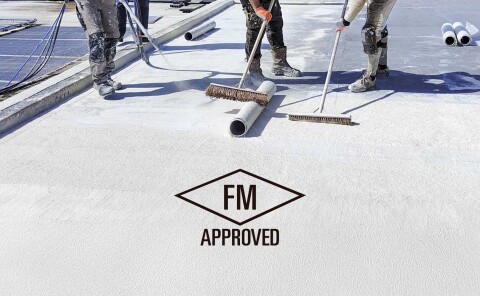
Inside the test hall
Olivier believes the most useful fire tests are designed, not just ordered. For AllShield's systems, he works with test laboratories on the set-up itself: which roof build-up, which PV configuration, where the fire starts and what is measured. That experience makes him a well-informed partner for anyone planning, commissioning or interpreting a fire test for a roof with PV.

From architecture to rooftop PV
Olivier studied building technology in the Netherlands and architecture in Antwerp. He has worked with architectural practices in the Netherlands, Belgium and Japan, and has founded and run businesses in architecture, façade finishing, EPS construction and passive fire protection.
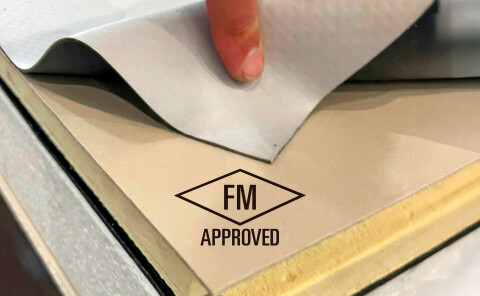
That background gives him a roof-first perspective. Structure, roof build-up, remaining service life, fixing strategy, fire behaviour and insurability set the conditions; the PV design follows. He has been directly involved in developing and preparing fire-test programmes for roof-PV assemblies at FM Approvals, ZAG, Efectis and SwRI. One lesson from that work runs through everything he writes: the classification of a single material does not determine how a roof with PV behaves. The complete assembly does.
Talks
The roof comes first
Rooftop PV is a roof decision before it is an energy decision. Most rooftop PV projects start with panel count and yield. This talk starts with the building: structure, remaining roof life, build-up and insurability, and shows what it costs when those questions are answered after the PV design instead of before it.
For asset owners, developers, architects and project teams.
How far may a fire travel?
Flame spread is only part of the question. What happens beneath the panels: how PV traps heat against the roof surface, why the membrane and insulation become part of the fire, and what decides whether a rooftop PV fire stays on the roof or becomes a building loss.
For risk engineers, insurers, fire engineers and roofing specialists.
Where protection ends
Residual risk begins where the demonstrated scope of a protection measure ends. Arc detection, rapid shutdown and better installation reduce the chance of ignition, but none of them brings it to zero. This talk asks what the roof still has to handle when prevention has done everything it demonstrably can.
For insurers, risk engineers, PV designers and electrical engineers.
The next euro
Where does the next euro of fire-risk spending do the most? Prevention, consequence limitation and Business Interruption weighed in one lifecycle model, from the asset owner's perspective rather than the installer's.
For asset owners, CFOs, risk managers and insurers.
Conference bio
Olivier Langejan trained as an architect in Antwerp, with a background in building technology and a career spanning architecture, commercial construction and entrepreneurship. He has been directly involved in developing and preparing fire-test programmes for roof-PV assemblies at FM Approvals, ZAG, Efectis and SwRI. He is the author of The roof comes first, a whitepaper series on rooftop PV as a building and asset decision, and works with AllShield. He presents to asset owners, engineers, risk engineers and insurers on rooftop PV decision-making, residual fire risk and consequence-limiting design.
Speaking formats and enquiries
Olivier is available for keynotes, technical lectures, expert panels, insurer and risk-engineering sessions and industry workshops. Presentations can cover the complete rooftop PV decision or focus on one specialist subject. He is also open to early-stage discussions with asset owners, engineers, roofing specialists and risk professionals who want to know whether an existing roof is ready for PV, and which questions should be resolved before the PV design is finalised.
For speaking invitations, roof and PV discussions, comments on the papers, or to be notified of new papers and versions:
Olivier Langejan
The Netherlands
ol@allshield.com
Passive fire protection for new and refurbished roofs with PV
The right roof assembly for PV and documented fire protection
Flat roofs with solar PV require fire protection that considers the complete roof assembly. AllShield BarrierSheet is our standard solution for new construction and roof refurbishment, installed beneath a new waterproofing membrane. AllShield Blue is a specialist alternative for selected existing roofs where retaining the current waterproofing provides a clear practical advantage.