Discover our fire-protection solutions for roofs with PV
5-3-2026
A structured view of rooftop PV fire safety
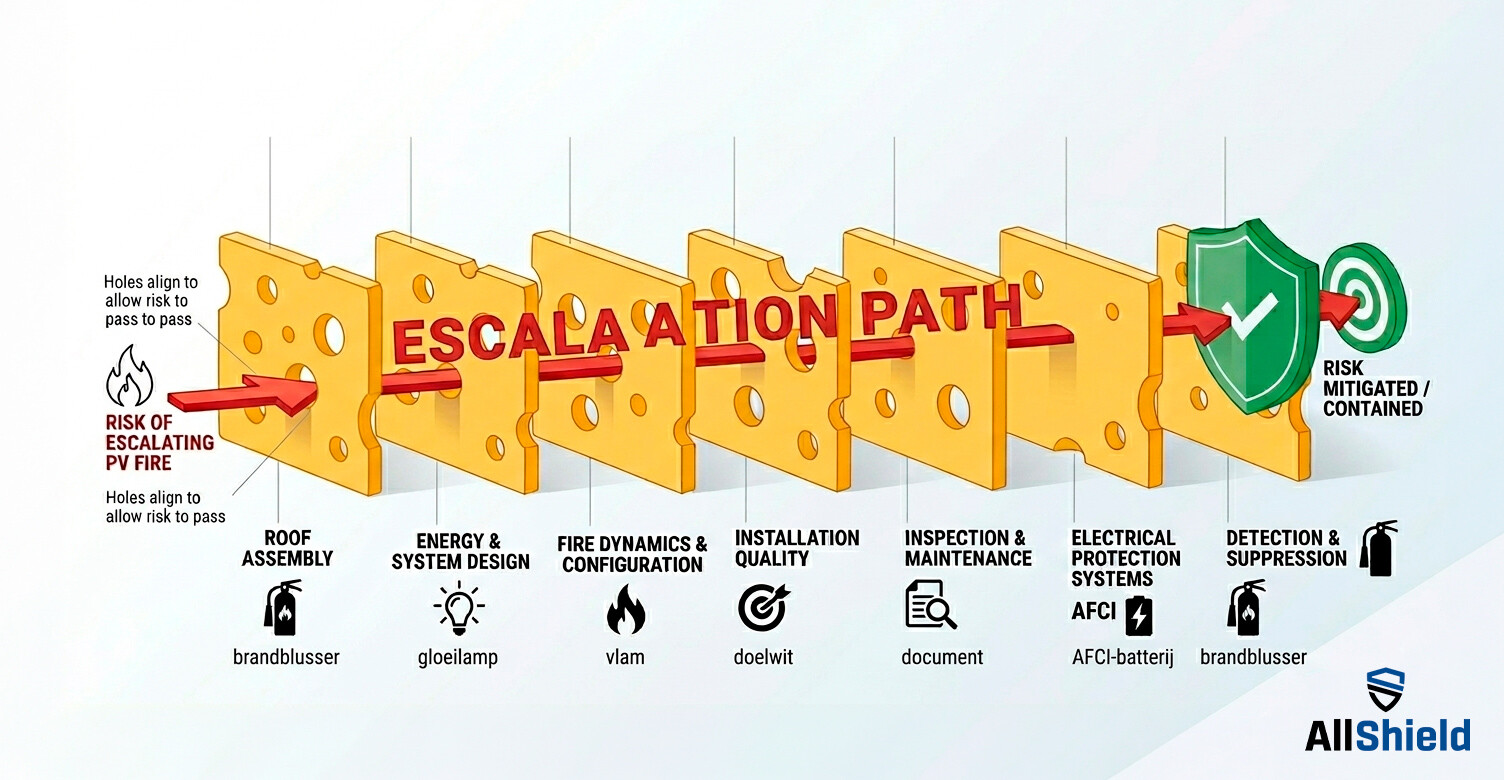
Rooftop PV fire safety is not one problem and therefore has no single solution. Electrical design, installation, monitoring, array geometry and roof construction influence different stages of the risk. A structured model helps distinguish what each measure achieves and what remains if earlier controls fail.
Different controls act at different stages
The market offers many ways to reduce rooftop PV fire risk, including improved connectors, arc detection, monitoring, shutdown systems, inspection, array-layout measures and passive roof protection. These measures are valuable for different reasons and should not be treated as interchangeable.
Electrical design and component selection influence the probability and energy of faults, while installation quality determines whether defects are introduced during construction. Inspection and maintenance can identify developing problems, and detection or interruption can reduce the duration of some fault conditions. The layout and geometry of the PV array influence the thermal environment above the roof.
The roof occupies another position in this system. Its membrane, insulation, protective layers and deck determine what happens when a fire already exists above the building envelope. Passive roof protection therefore remains relevant even in a PV system with strong preventive controls.
Looking at the system in layers avoids asking one technology to perform every function. Electrical prevention cannot replace the roof, and passive roof protection cannot prevent an electrical defect from occurring.
The roof as an independent layer
Components age, installations are modified and not every developing fault is detected before failure. A robust rooftop PV strategy therefore includes measures that remain effective after ignition has already occurred.
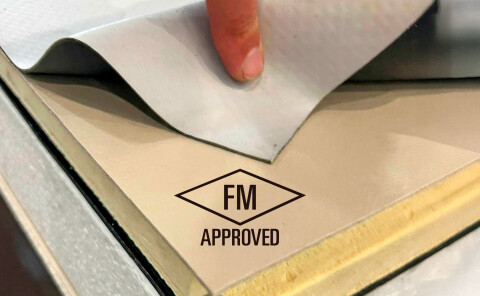
AllShield BarrierSheet is designed for this stage of the risk. In the tested ZAG roof-PV configurations, it prevented direct flame penetration into deeper structural layers, providing an independent passive barrier beneath the waterproofing membrane.
Defence in depth
The strongest strategy is one in which several independent measures need to fail before a local defect can develop into a major building loss. Component selection, installation, inspection, detection, array design and the roof each contribute at a different stage.
This is the logic behind defence in depth and other established barrier-based risk models. Instead of asking whether one measure makes a system safe, the assessment asks what happens when one layer fails and which independent layers remain.
For building owners and insurers, this approach makes residual risk easier to understand. Each measure has a defined function and can be assessed against evidence appropriate to that function.
For the complete risk-model approach, read Olivier Langejan's whitepaper From risk models to design requirements. AllShield can also help translate that framework into a project-specific commercial roof-PV build-up.
Passive fire protection for new and refurbished roofs with PV
The right roof assembly for PV and documented fire protection
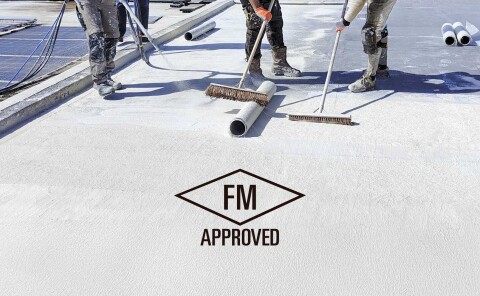
Flat roofs with solar PV require fire protection that considers the complete roof assembly. AllShield BarrierSheet is our standard solution for new construction and roof refurbishment, installed beneath a new waterproofing membrane. AllShield Blue is a specialist alternative for selected existing roofs where retaining the current waterproofing provides a clear practical advantage.
Do you have any questions for us?
We're here for you!